The Big Idea
Every modern neural network is trained with backpropagation: computing gradients of a global loss and pushing them backward through every layer. Backprop is powerful, but it is:
- Biologically implausible: real neurons don't receive error signals from the future
- Memory-intensive: requires storing all intermediate activations for the backward pass
- Hard to parallelize layer-wise: each layer waits for the layer above to finish its backward pass
NoPropDT (from researchers at the University of Oxford) replaces backprop with a stack of local denoising blocks. Each block learns to denoise a class embedding toward the correct label , no global gradient, no backward pass through the whole network.
How NoPropDT Works
The intuition maps directly to diffusion models: start with a noisy guess and iteratively denoise it.
- Start with a noisy class embedding (Gaussian noise added to the label embedding)
- A DenoiseBlock (CNN + MLP) processes the image alongside the noisy embedding and predicts a cleaner version
- This is repeated T times: each block is trained with a local MSE loss only (no chain rule across blocks)
- A final linear classifier reads the fully denoised embedding and predicts the class
Results
| Dataset | Variant | Accuracy | Epochs to convergence |
|---|---|---|---|
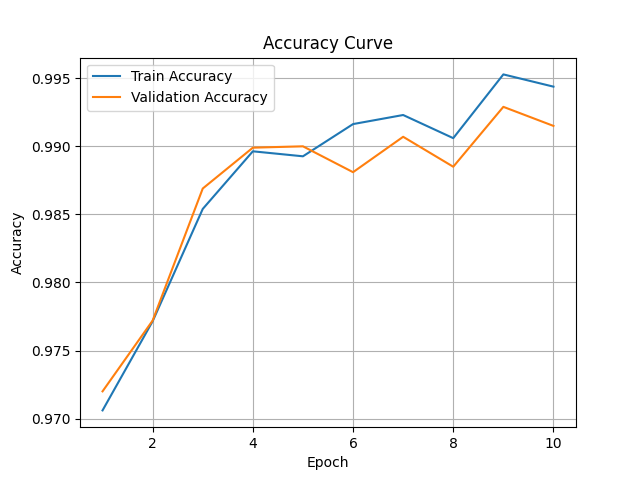
| MNIST | With nonlinear decoder | ~99% | 7 |
| MNIST | No decoder | ~97% | 10 |
| CIFAR-10 | With nonlinear decoder | ~76% | 50 |
| CIFAR-10 | No decoder | ~68% | 50 |
All results achieved without backpropagation. Training uses only local per-layer MSE losses.
Why I Built This
This was a deep-dive reproduction exercise: reading a research paper (Oxford, 2025) and rebuilding it from scratch in a clean, modular PyTorch codebase, then extending it to CIFAR-10 and adding a nonlinear decoder variant.
Relevance to interpretability research: Interpretability work depends heavily on the ability to reproduce and extend existing architectures precisely enough to probe their internals. The skill being practiced here, reading a paper, reconstructing it layer by layer, verifying that your numbers match, then extending it, is exactly the empirical reproduction skill that mechanistic interpretability research runs on.
The repo has earned 5 ⭐ and is actively watched by researchers interested in backprop-free learning.